
The Finance Ministry is set to commence its pre-budget meetings on October 12, initiating preparations for the Union Budget 2027-28, which will be the fourth budget of the Modi 3.0 government and the tenth for Finance Minister Nirmala Sitharaman.

The Finance Ministry has clarified that the decision to impose a 0.4% Merchant Discount Rate (MDR) on UPI transactions above Rs 2,000 was made independently, refuting claims of foreign influence. The ministry stated the policy aims to build a self-sustaining digital payments ecosystem, with MDR funding infrastructure and supporting small merchants.
The Finance Ministry has refuted allegations that US pressure influenced the decision to levy a 0.4% Merchant Discount Rate (MDR) on select UPI payments. It clarified that NPCI guidelines prioritise RuPay credit cards on UPI to foster a domestic payment ecosystem and that the MDR introduction aims to create a sustainable revenue model for smaller domestic companies, thereby protecting India's sovereignty in digital payments.

The Finance Ministry has refuted allegations that US pressure influenced the decision to levy a 0.4 per cent Merchant Discount Rate (MDR) on select UPI payments. The ministry clarified that the NPCI guidelines prioritise RuPay credit cards on UPI to promote domestic alternatives and ensure a self-sustaining revenue model for smaller domestic companies, countering claims of favouring foreign payment providers.

The Finance Ministry has clarified that the 0.4 per cent Merchant Discount Rate (MDR) on UPI transactions above Rs 2,000, effective October 15, is not expected to increase cash transactions or cause inflation. The ministry also dismissed allegations of US pressure influencing the decision, asserting that the policy aims to promote RuPay credit cards within the UPI ecosystem, and a monitoring mechanism will ensure the MDR burden is not passed on to consumers.

The new government that presents the full Budget for 2024-2025 in July should be ready to restructure the way divestment is managed and implemented, proposes A K Bhattacharya.

The Union Sports Ministry has committed a grant-in-aid of Rs 2000 crore to the Gujarat Government for hosting the 2030 Commonwealth Games in Ahmedabad. This funding, based on 2025 rates and expected to reach Rs 2500 crore by 2030, will be disbursed from the Assistance to National Sports Federations (ANSF) scheme. Ahmedabad won the bid last year to host the centenary edition, which is anticipated to be a grand event featuring 15 to 17 disciplines, unlike the scaled-down Glasgow Games.

A senior official from the Union Ministry of Finance died and three others were injured after a BMW allegedly struck his motorcycle in Delhi. Police are investigating the incident.

The Finance Ministry has dismissed allegations of US pressure influencing the 0.4% Merchant Discount Rate (MDR) on select UPI transactions. It clarified that NPCI guidelines prioritise RuPay credit cards on UPI and do not favour international cards. The ministry also asserted that the MDR, applicable to person-to-merchant transactions above Rs 2,000, is unlikely to increase cash transactions or cause inflation, with measures in place to prevent burdening consumers.

The Indian government has revised its windfall tax on fuel exports, increasing the levy on petrol exports to Rs 2.5 per litre while cutting the duty on diesel exports to Rs 8.5 per litre, effective October 16.

75% of India's 60 million digital-payment merchants have never recorded a transaction above 2,000.

The finance ministry has announced that all banks, including Regional Rural Banks, will remain open on Sunday, September 27, 2026, to ensure public convenience amidst a proposed three-day strike by the United Forum of Bank Unions (UFBU) starting September 28, 2026. The strike, if it materialises, seeks a 5-day banking week and pension reforms.
With inflation comfortably below the Reserve Bank of India's (RBI's) 4 per cent median target and likely to undershoot its 3.7 per cent projection for 2025-26 (FY26), there is room for the monetary policy easing cycle to be sustained, the Finance Ministry said on Monday. The comments, featured in the ministry's Monthly Economic Review for June 2025, assume significance ahead of the Monetary Policy Committee (MPC) meeting of the Reserve Bank of India (RBI) scheduled to begin from August 5.

The Indian government has introduced a 0.4% fee on UPI transactions above Rs 2,000 for merchants, effective October 15, sparking strong opposition from political parties and traders. Despite accusations of foreign influence and demands for a rollback, the finance ministry and top functionaries have stated there will be no reversal, citing the need for a self-sustaining digital payments ecosystem.

The Indian government has confirmed there will be no rollback of the 0.4 per cent Merchant Discount Rate (MDR) charges on Unified Payments Interface (UPI) transactions exceeding Rs 2,000, effective from October 15. Despite opposition, officials state the decision aims to make the UPI ecosystem self-sustainable and secure, with charges applying only to merchant payments, not person-to-person transactions.

The Ministry of Heavy Industries (MHI) anticipates disbursing approximately 4,700 crore in incentives under the automotive PLI scheme in FY27, more than double the previous two years, while also exploring financing mechanisms for electric buses and trucks and promoting domestic manufacturing of critical EV components.

The Centre has spent 28 per cent of its FY27 capital expenditure budget of Rs 12.21 trillion in the first three months against around 24.5 per cent during the corresponding period a year ago.

'There will be some inconvenience to people. But we have given one-month notice to the government one month ago.'

Banking services across India, particularly at public sector banks, are set to be disrupted for three days starting Monday due to a nationwide strike by bank unions. The strike, called by the United Forum of Bank Unions (UFBU), is primarily to press for a five-day working week and other demands, despite the finance ministry's appeal for dialogue.

Shares of fintech firms, particularly Paytm, saw significant movement after the Indian government introduced a 0.4 per cent fee on UPI transfers exceeding Rs 2,000 made to merchants, effective October 15.

India has initiated anti-dumping investigations into imports of Glycine from China, following a complaint by Avid Organics, alleging material injury to domestic manufacturers. Concurrently, a separate anti-circumvention probe has begun concerning CPVC resin from China and South Korea, suspected of being routed through Malaysia, Japan, and Thailand to avoid existing duties.

Bankers said the impact could become more visible from September 29 as customers could withdraw larger amounts of cash, although ATM operations are increasingly managed through third-party cash-loading arrangements.

Dedicated Ayush dispensaries increased from 26,130 in 2013-2014 to 37,804 in 2024-2025, while hospitals rose much more slowly, from 3,605 to 3,885.

The Indian government has introduced a 0.4% transaction fee on UPI payments above Rs 2,000 for merchants, effective October 15, sparking a political row. The Congress party has labelled it a "Modi tax" and accused the government of succumbing to US pressure, while the BJP has defended the move, clarifying that consumers will not be charged and small vendors are protected. The finance ministry reiterated that the charge is on merchants, not customers.

The finance ministry on Thursday sought to clarify that there was no distress in household savings and the data indicated that changing consumer preference for different financial products was the real reason for the change in the pattern of household savings. The clarification comes in the backdrop of Reserve Bank of India data showing that household net financial savings rate is at its lowest in decades, at 5.1 per cent of GDP in FY23 compared to 7.2 per cent of GDP in FY22. The divergence in the data for household gross financial assets and liabilities is not a cause for concern for the government, as the loans have largely been taken to buy real assets or automobiles, the finance ministry said.

Opposition MPs have voiced strong concerns regarding the government's decision to levy a 0.4 per cent fee on UPI payments above Rs 2,000 made to merchants, effective October 15. They argue that this "anti-people" move will negatively impact a large segment of the population, despite the finance ministry clarifying that the charge is on the merchant ecosystem and not directly on customers for P2P or small payments.

As the debate on revealing names of those who had stashed money abroad was hotting up, a Parliamentary panel grilled finance ministry officials on why the confidentiality clause was put in tax treaties in the first place.

The Directorate of Revenue Intelligence (DRI) has conducted multiple intelligence-led operations across India, seizing over 845 kg of various contraband substances including ganja/cannabis, charas, amphetamine, and cocaine. These operations led to the arrest of 15 individuals involved in illicit drug trafficking, disrupting several supply chains.

The fiscal consolidation path and Rs 1 trillion stabilisation fund provide room to absorb mild shocks, but sustained oil-price increases pose risks.

The Indian Finance Ministry has instructed its officials to refrain from using AI tools and apps like ChatGPT and DeepSeek on government devices, citing concerns over data confidentiality. This move comes amidst global discussions regarding the potential security risks associated with AI tools and follows similar actions by countries like Australia and Italy, which have restricted access to DeepSeek due to privacy concerns. The directive highlights the growing awareness of the potential security implications of AI technology in government environments.

Loan against gold as a product is catching on fast. Let's keep the momentum going, but aim for sustainable growth. A few bad apples should not ruin the brunch, argues Tamal Bandyopadhyay.

'The number of airport bundles that may be awarded to a single bidder would be capped.'

The Supreme Court has directed the Central Bureau of Investigation (CBI) to examine all six allegations of financial irregularities levelled by the Enforcement Directorate against Sameer Gehlaut, former chairperson of Indiabulls Housing Finance (IHFL), and five corporate groups, following repeated criticism of investigating agencies for lack of progress.

The NCP (SP) has demanded a complete rollback of the 0.4 per cent Merchant Discount Rate (MDR) on UPI transactions above Rs 2,000, effective October 15. The party termed the move a "direct assault" on small traders and shopkeepers, accusing the Modi government of "double standards" by burdening small merchants while large industrialists benefit from loan write-offs.

Former Rajasthan chief minister Ashok Gehlot has criticised the Centre for introducing a 0.4% charge on UPI transactions above Rs 2,000, alleging the decision was influenced by pressure from the United States and its payment companies like Visa and Mastercard. He highlighted a perceived shift in the government's stance on Merchant Discount Rate (MDR) for UPI, claiming it would ultimately burden consumers and small businesses while benefiting American firms.
NPCI International and Uzbekistan's NIPC have partnered to enable UPI payments across Uzbekistan, allowing Indian tourists, business travellers, and students to make instant merchant payments using the UZQR code. This agreement, approved by RBI and CBU, integrates UPI with Uzbekistan's national payment system, HUMO, facilitating direct P2M payments from Indian bank accounts and reducing reliance on foreign exchange or international cards.
India's Goods and Services Tax (GST) receipts, after accounting for refunds, surged by 18.1 per cent annually to approximately 1.77 trillion in September, marking its fastest growth in six months. This increase was primarily driven by a significant rise in tax revenue from imports, which grew 26 per cent annually.
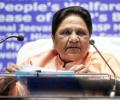
BSP chief Mayawati has criticised the Centre's decision to introduce a 0.4 per cent fee on UPI merchant transactions exceeding Rs 2,000, effective October 15. She termed it a "capitalist profiteering attitude" that burdens the common people, while the government clarified that the charge is on merchants and not customers for person-to-person transactions.

Former NITI Aayog vice-chairman Rajiv Kumar has urged the government to maintain zero-fee UPI transactions for several more years, arguing that the benefits of UPI as a public good outweigh the costs. This comes amidst the government's recent decision to introduce a 0.4% fee on person-to-merchant UPI transactions above Rs 2,000 from October 15, a move that has drawn criticism.

Finance Minister Nirmala Sitharaman urged PSBs to become 'cool' and shed their 'government bank' image to attract young customers.
